


Seeking to redefine sustainability not solely through energy reuse, but also by supporting and maintaining community.
The site started as a county waste dump or landfill until in 2006, the closed landfill turned into the Jackson County Green Energy Park. The JCGEP was initiated to address the need for landfill stewardship and culminated in the first of if kind landfill gas-powered arts facility. This is the only facility in the world that captures the daily landfill gases produced through decomposition and pipes it to power glassblowing and blacksmithing studios for use. This ability helps to deal with the environmental hazardous gases while at the same time helping to provide cheap studio operations, as the gas is free.
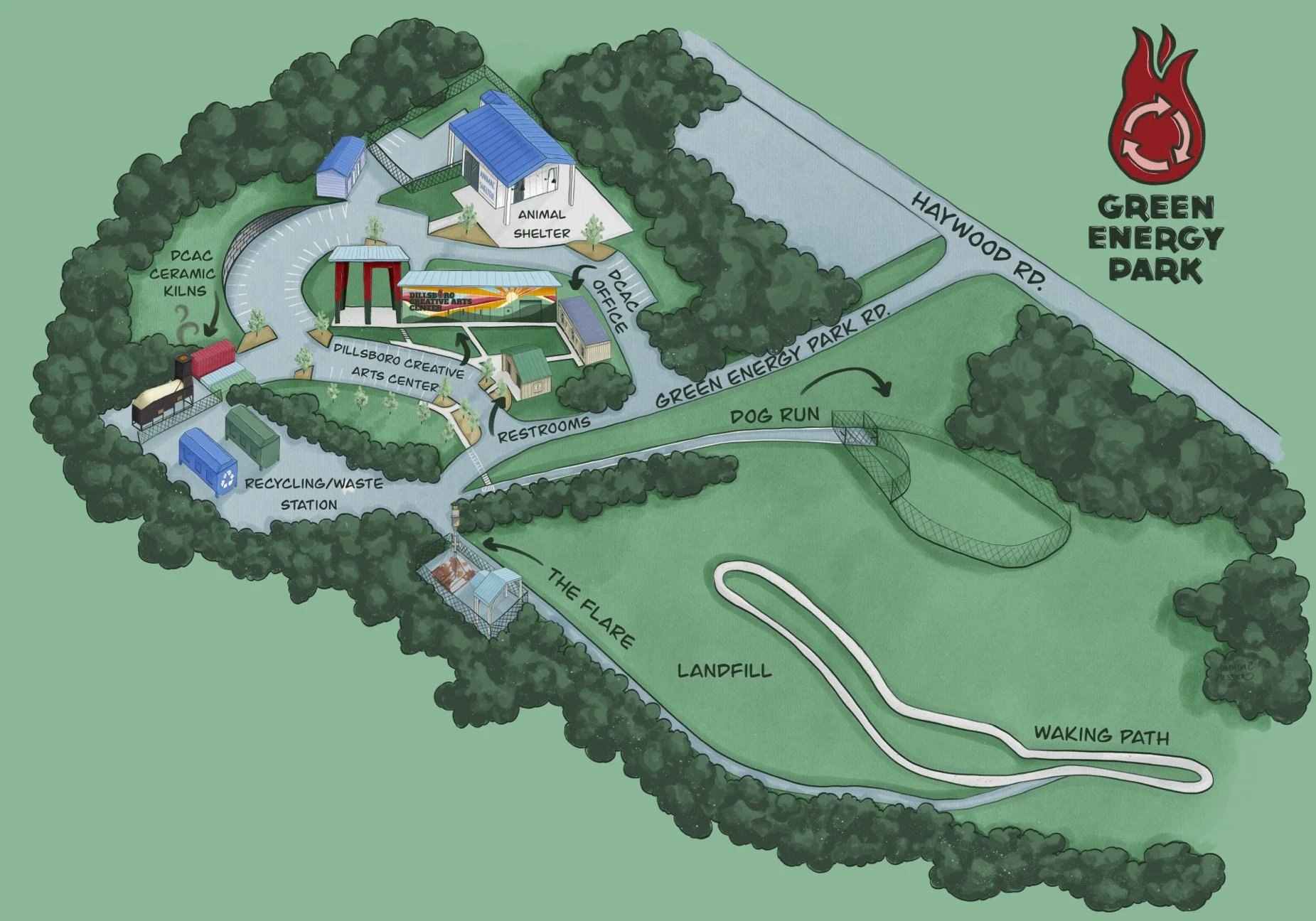
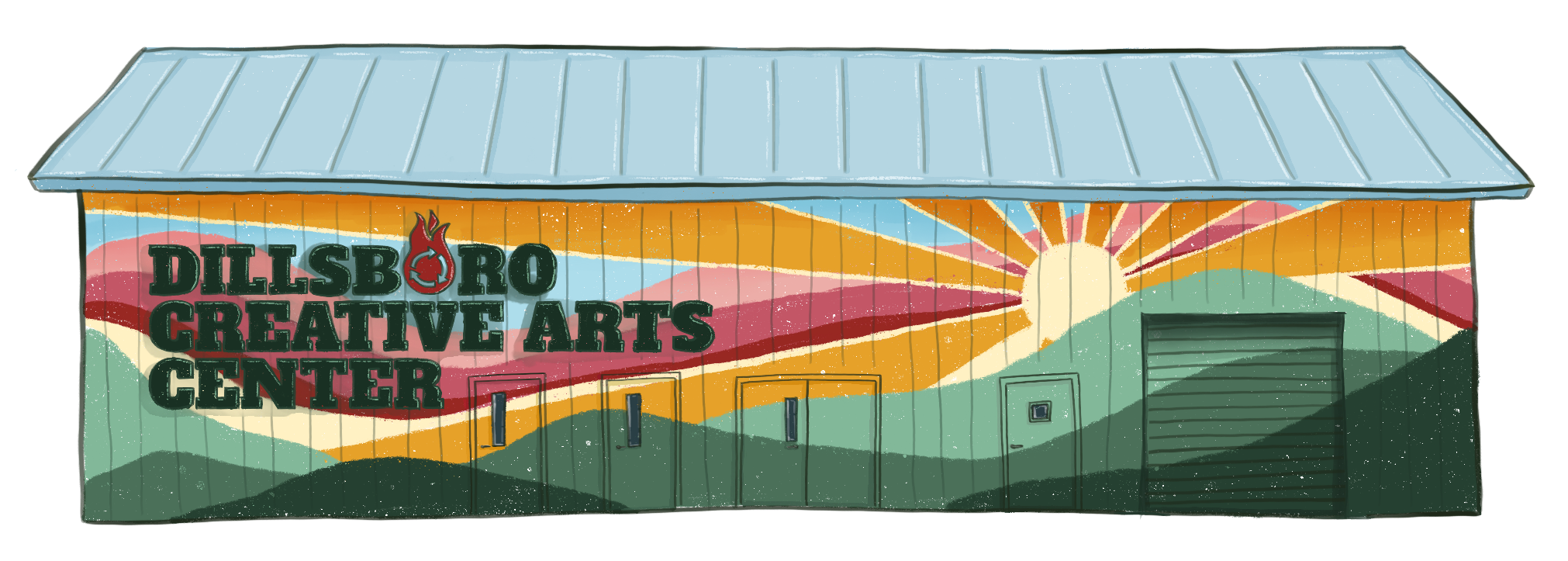
The Jackson County Green Energy Park (JCGEP) is now the official name for the entire county-owned campus. The campus includes a dog run, walking trail, SRC county waste and recycling center, animal shelter, and the newly established Dillsboro Creative Arts Center (DCAC).
Jackson County Green Energy Park Campus

We seek to make an environmental difference.
The Green Energy Park campus was built on and beside a former landfill that naturally produces methane gas — a potent greenhouse gas that can severely impact the environment when released into the atmosphere. Instead of simply flaring or burning off the methane as waste, the Park captures and redirects the gas to fuel its studios and artistic facilities, transforming an environmental liability into a sustainable energy resource.
Like most landfills, the site also generates PFAS, commonly known as “forever chemicals,” in both liquid and gaseous forms. While liquid contaminants can be monitored and treated, landfill gases are typically flared into the air at temperatures around 1,000 degrees. Because PFAS compounds are still being studied and are linked to serious health concerns, the Park recognized the importance of ensuring its artists, staff, and visitors were not being exposed to harmful airborne particles within the studios.
In January 2025, a newly developed PFAS air test became commercially available for the first time. As the only known facility of its kind in the world using landfill methane to fuel artistic studios, the Green Energy Park conducted extensive testing to verify the safety of its operations. One key concern was whether the Park’s 2,000-degree furnaces were completely destroying PFAS compounds or simply breaking them into smaller, potentially hazardous particles.
Working alongside Eurofins Scientific laboratories in Knoxville, the Park completed two rounds of air-quality sampling. The results confirmed that the extreme temperatures inside the furnaces effectively destroyed the harmful PFAS compounds, validating that the studio environments are safe for artists, staff, and the public.
There’s something almost poetic about it, honestly — an old landfill becoming a place for art, community, and environmental innovation instead of just a scar on the landscape. Bit of an industrial phoenix situation.
For more information on the environmental benefits of the Park, please see this PDF.
Each year our facilities:
That’s comparable to:
• Removing 916 vehicles off the road, or
• Planting 1,305 acres of forest, or
• Preventing the use of 11,104 barrels of oil, or
• Displacing the use of 521,870 gallons of gas
• Prevent 281 tons of methane from entering the atmosphere
• Offset 550 tons of CO2 that have been created by fossil fuels